


Hiring a WordPress developer for small business websites is one of those jobs that looks simple until it goes wrong. The site gets built, it looks fine, and six months later nobody can update it, the hosting login belongs to someone who has stopped answering emails, and every small change costs a fresh quote.
I have been on both sides of this. I ran sales and billing at a trading company for years before Devsio was my full-time work, so I know what it is like to be the business owner who just wants the thing to work. And we now pick up a steady number of sites that another developer started and could not finish. The problems are almost always the same ones, and nearly all of them could have been caught before the deposit was paid.
Here are the nine checks I would run if I were hiring a WordPress developer for my own small business today.
1. Ask who will own the domain, hosting and WordPress admin
This is the first question for a reason. The domain, the hosting account and the top-level WordPress administrator account should all be in your name, paid from your card or invoiced to you. The developer gets their own login, not the other way round.
A good developer will agree to this without hesitation. If the answer is vague, or you are told it is "easier" if they hold everything, treat that as a warning. It is easier for them. It is a problem for you the day you want to move on.
2. Look at two live sites they built, not screenshots
A portfolio of screenshots tells you the designer had taste. It does not tell you whether the site loads on a phone, whether the contact form sends, or whether the business still uses it.
Ask for two live URLs and open them on your own phone, on mobile data. Tap through to the contact page. Fill in the form if it is appropriate. If you can, ask the owner of one of those sites how the project went. Most business owners are happy to give a straight answer in two minutes. Our own case studies link to the live projects for exactly this reason.
3. Find out what the site will be built with
WordPress on its own tells you very little. The real question is what sits on top of it. A site built on a lightweight theme with a few well-chosen plugins behaves very differently from one assembled from a heavy page builder, three slider plugins and a bundle of add-ons nobody updates.
You do not need to know the technical detail. Ask two things: which theme or builder they plan to use, and roughly how many plugins the finished site will run. If the plan involves a long list of premium plugins, ask who pays the annual licences after launch, because that bill lands on you.
4. Ask how you will edit the site yourself
Most small businesses need to change prices, opening hours, staff photos and the odd page of text without raising a ticket. Ask the developer to show you, on a site they have already built, how a non-technical person edits a page. If the answer is "just send it to us", you are signing up for a dependency, not a website.
A reasonable handover includes a short walkthrough, ideally recorded, and a login with enough permissions to edit content without being able to break the whole site.
5. Get the scope in writing, including what is not included
Most disputes are not about quality. They are about a gap between what the client thought they were buying and what the developer thought they had quoted for.
The written scope should list every page, every form, any integrations such as booking or payments, how many rounds of design changes are included, and who writes and supplies the content. It should also say plainly what is outside the price. Copywriting, product photography, migrating hundreds of old blog posts and setting up email are the usual surprises.
6. Ask what happens to SEO on day one
A new website can quietly undo years of search visibility if old URLs disappear without redirects. If you already have a site, ask how the developer will map old pages to new ones and set up 301 redirects before launch. If the answer is blank, that part of the job has not been thought about.
For a brand new site, ask at least whether page titles, meta descriptions, a sitemap and Search Console will be set up before launch. None of this is advanced. It is just often skipped. Our SEO service page sets out what we treat as the basics.
7. Check how speed and mobile are handled
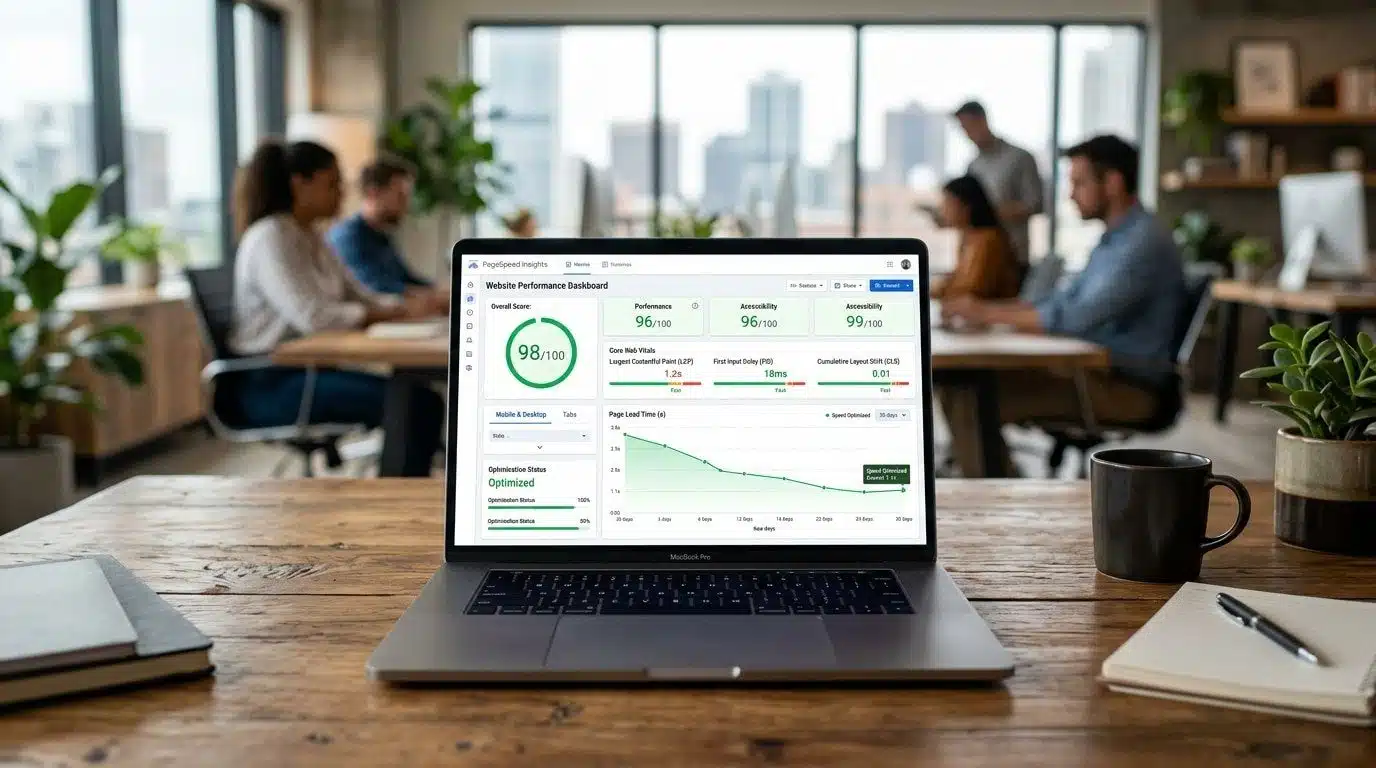
You can check this yourself in a minute: paste two of their live sites into Google's free PageSpeed Insights tool and look at the mobile results. A good WordPress developer for small business sites will be happy to talk through the numbers with you.
Most of your visitors will arrive on a phone. Ask how the developer tests on mobile and what they do about page speed: image compression, caching, and keeping scripts under control. You are not looking for a lecture. You are checking that it is part of their normal process rather than something they fix if you complain.
If you run an online shop, this matters even more. A slow checkout costs orders directly, which is why we treat WooCommerce speed as its own piece of work.
8. Ask what support looks like after launch
Something always needs adjusting in the first few weeks. Ask how long post-launch fixes are covered, what counts as a fix rather than new work, and what ongoing maintenance costs if you want updates, backups and security checks handled for you.
Get the response time in writing. "We are always available" is not a support arrangement. For reference, we include 30 days of fixes after launch and offer monthly maintenance separately, so clients can choose whether they want it.
9. Compare quotes on what is inside them, not the total
Two quotes for "a five page WordPress website" can differ by several times, and sometimes both are fair. One might include copywriting, a custom design, SEO setup and training. The other might be a template with your logo dropped in.
Lay the quotes side by side against the same list: design, number of pages, content, forms and integrations, SEO setup, speed work, training, and support. The cheapest quote often stops looking cheap once the gaps are filled. Our pricing page lists what sits inside each package if you want a reference point.
Warning signs to walk away from when hiring a WordPress developer
That last one deserves a sentence of its own. Nobody controls Google's rankings. A developer can build a site that is fast, well structured and easy for search engines to understand, and that is worth a lot. A guaranteed position is a sales line.
- They want the domain or hosting registered in their name.
- They cannot show you a live site they built in the last year.
- The quote is one line with no list of pages or features.
- They ask for full payment up front on a project longer than a couple of weeks.
- They promise first-page Google rankings by a date.
Questions small business owners ask us
Should I hire a freelance WordPress developer or an agency?
Either can work. A good freelancer is often cheaper and more direct. An agency gives you cover if one person is ill or leaves. What matters more is whether they pass the checks above. If you go freelance, be extra careful about point one, because a single person disappearing is the most common way small businesses lose access to their own site.
How long should a small business WordPress site take?
For a typical brochure site with a handful of pages, three to five weeks is realistic once content is ready. Most delays come from waiting on text and photos, so ask early who is producing them.
Is WordPress still the right choice?
For most small businesses that need to edit their own content, yes. There are cases where a faster, custom-built front end makes sense, usually when speed or scale really matters. We cover that trade-off in our small business website development service.
If you want a second opinion
If you already have a quote from another developer and want someone to read it over before you commit, send it across through our contact page. We will tell you honestly whether it looks fair and what is missing, even if the answer is that you should go ahead with them.
Related guides
- Is your page builder slowing down your WordPress site? The fixes that work without a rebuild.
- Next.js or WordPress for a small business website? An honest comparison of both.
- Website traffic but no enquiries? Five checks that fix it.