


ERP sounds like something for factories and multinationals. For a shop or wholesale business in Pakistan, it means something much simpler: one system where your billing, stock, khata and accounts talk to each other, so you stop keeping the same numbers in three different places.
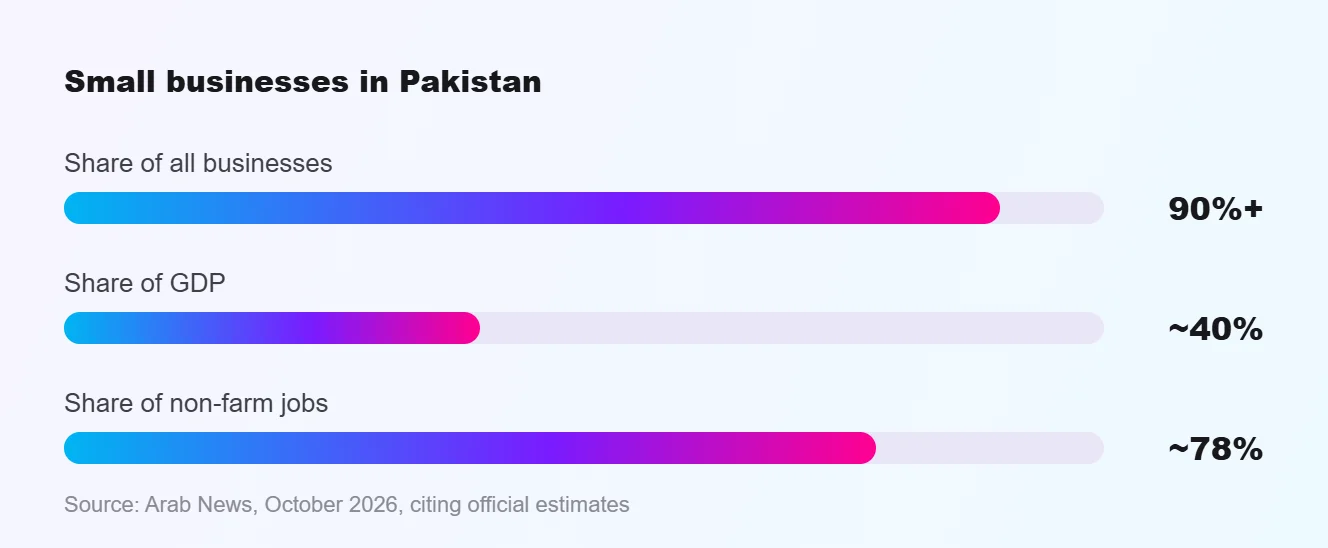
Small businesses are the backbone of the economy here. They make up more than 90 percent of businesses in Pakistan, produce around 40 percent of GDP and employ roughly 78 percent of the non-farm workforce, according to official estimates reported by Arab News in October 2026. Yet most of them still run on registers, parchis and Excel.
Retail is also slow to go digital. Fewer than 700,000 retailers were connected to digital payment systems as of late 2025, against a government target of 2 million by mid-2026. The shops that move first will have an edge.
What ERP software means for a small business
ERP stands for enterprise resource planning. Ignore the jargon. In a shop, it is the system that connects five jobs you already do by hand: making bills, keeping stock, managing customer and supplier khatas, doing the accounts and checking how the business is going.
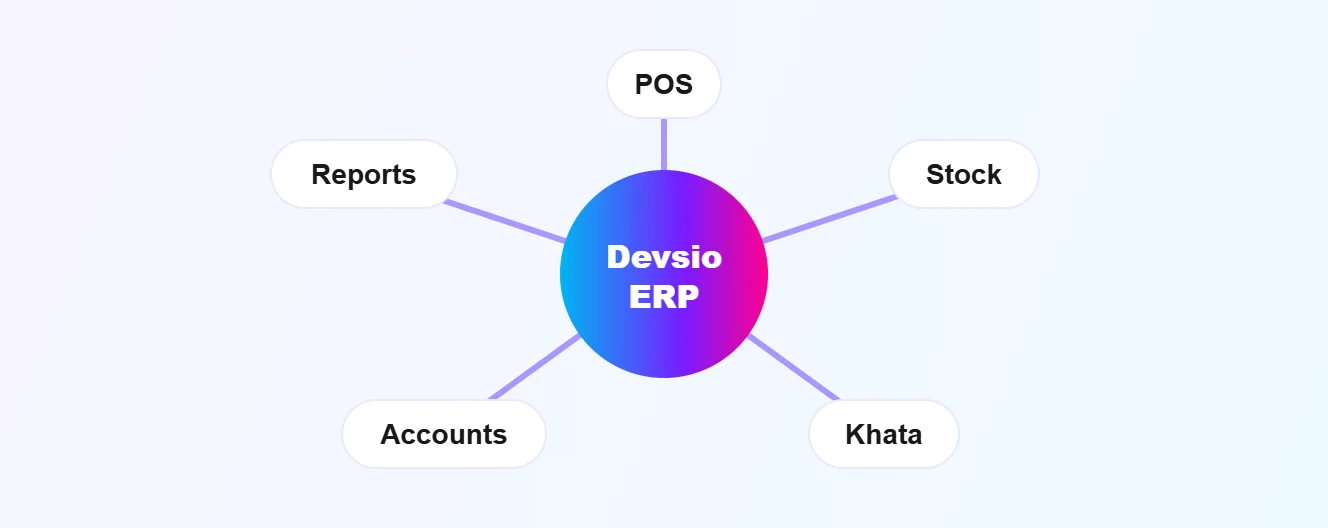
The value is in the connection. Make one bill and the stock goes down, the customer's khata goes up and today's cash is counted, all at once. Nobody re-types anything at night, and the numbers agree with each other.
Signs your business has outgrown registers and Excel
If three or more of these sound like your shop, you are paying for the lack of a system every day, even if it doesn't show up as a bill.
- The cash at closing rarely matches the day's sales, and nobody knows why.
- You find out an item is finished when a customer asks for it.
- Stock is counted once a year, if at all.
- Supplier price changes take hours to update by hand.
- Udhaar balances live in a register only one person understands.
- You can't tell which items make money and which just sit in the godown.
- When you are away from the shop, you have no idea how the day is going.
ERP vs POS vs accounting software
These three are often confused. POS software handles the counter: billing, receipts and the cash drawer. Accounting software handles the books: ledgers, trial balance and financial statements, usually entered after the fact. ERP software covers both and adds inventory, godowns, khata and reports, all fed by the same bills.
A single small counter can manage with good POS software. Once you have a godown, a few staff, supplier credit and customer udhaar, separate tools start to disagree with each other, and that is when ERP pays for itself. If you are still deciding on the counter side, start with our guide to POS software in Pakistan.
Dead stock: the money you don't see
Every shop has maal that has sat in the godown for a year. It looks like stock on the shelf, but it is really cash that can't be used to buy what sells. Without a system you usually discover it only when it is damaged or out of fashion.
ERP software shows stock value and slow movers on one screen, so you can act early: return it to the supplier, bundle it, or push it with a small incentive to staff. You can't clear what you can't see, so visibility always comes first.
Rolling out ERP without stopping sales
The fear is that a new system will slow the counter for weeks. It doesn't have to. Run it in four steps, and keep the old register running for a few days as a backup if that makes you comfortable.
- Clean your item list: one name per item, current prices, and barcodes where you have them. Import it from Excel.
- Enter opening balances: today's stock count and each customer's and supplier's khata balance.
- Train the counter first: billing and khata on day one. Reports and accounts can wait a week.
- Close the day in the system: once the daily cash closing matches, retire the register.
Devsio ERP, built in a Pakistani shop
Devsio ERP (formerly Devsio POS) is our own ERP and POS software for Pakistani retail and wholesale. It brings point of sale, inventory with godowns, khata and accounts, AI voice commands, WhatsApp bills and a live dashboard into one system. It was built for and still runs every day at Star Electric Enterprises, an electrical trading business in Saddar, Rawalpindi.
Pricing is shared on request, with licence, update and support terms in writing before you pay. If your business needs something more specific, our custom software team can build on the same foundation. And if udhaar is the first thing you want to fix, read digital khata vs register.
Frequently asked questions
Is ERP software too expensive for a small shop? Not necessarily. Compare the price with what you lose today in forgotten udhaar, dead stock and hours spent matching cash. Ask for the full cost in writing, including updates and support.
Do I need a computer expert to run ERP? No. If your staff can use WhatsApp, they can learn billing in a day. Good software is built around the words you already use: khata, challan, udhaar.
Which businesses in Pakistan benefit most? Kiryana and super marts, wholesale and distribution, electrical and hardware, pharmacies and clothing stores, especially once there is a godown or more than one counter.
See Devsio ERP on your own business
Book a free demo and watch your own items, khata and reports in one system. Explore Devsio ERP or book a free demo on WhatsApp.