
STEMP21: Cross-Platform Mobile Learning App
A Flutter app that teaches robotics, science and coding through short videos and quizzes, written once for both iPhone and Android.
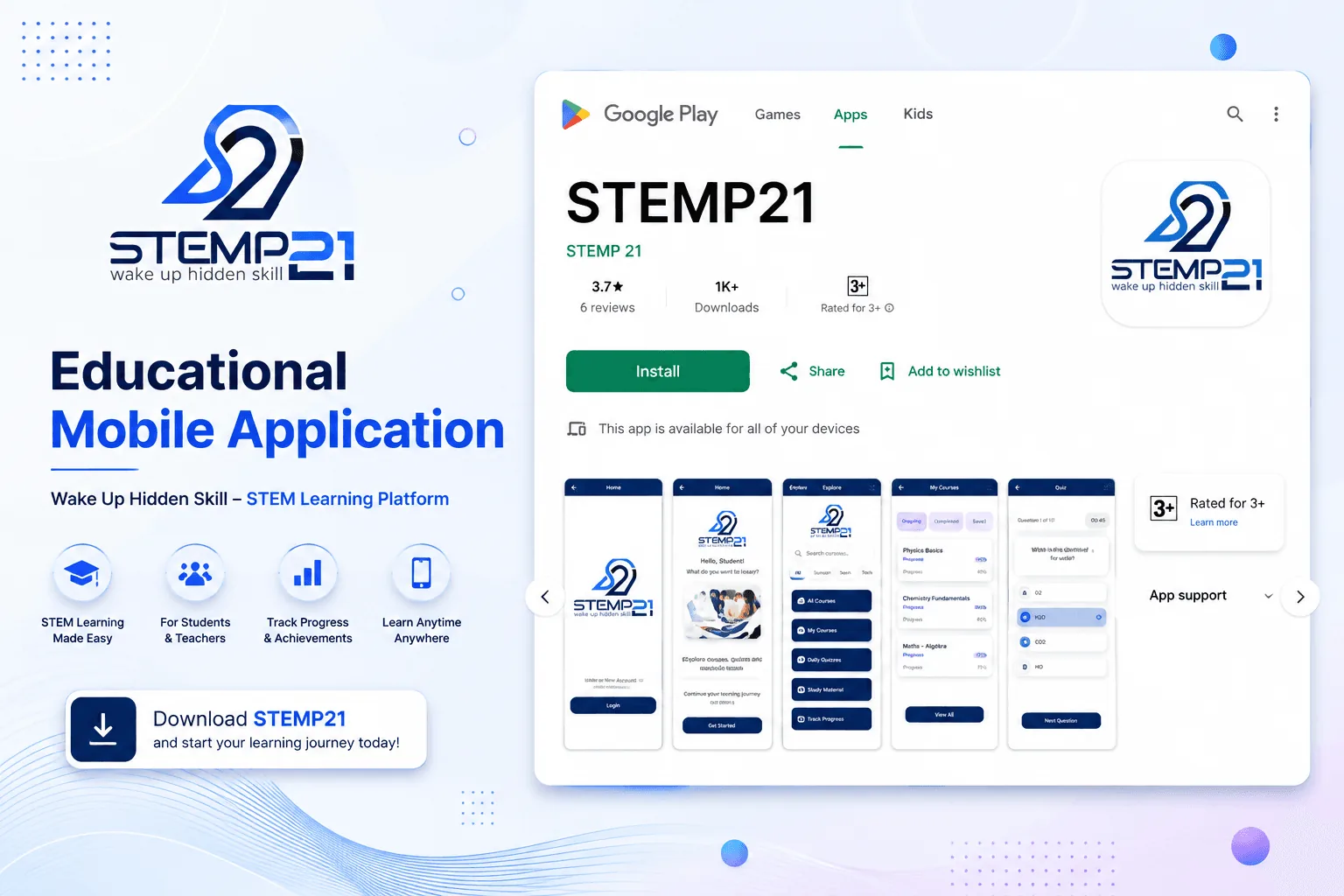
The Challenge
STEMP21 needed a native-quality cross-platform app on both iOS and Android with smooth offline video playback, student progress analytics, and parent reporting portals. Each of those requirements pulls in a different direction. Native quality on two platforms usually means two codebases and two teams, which is out of reach for an education business at this stage. Offline video is the hardest of the three: lesson content is large, storage on a student's device is limited, and the reason it is needed at all is that mobile data is expensive and connectivity is unreliable, which is exactly when a download is most likely to fail partway through. Progress analytics and parent reporting look like reporting features but are really retention features. In education products the person who pays is rarely the person using the app, and a parent who cannot see what their child is doing stops paying.
What We Built
We built the app in Flutter, which is the decision that makes the rest affordable. One codebase produces both platforms without dropping to the kind of wrapped web view that students notice immediately. The 60fps target was treated as a requirement rather than a nice-to-have, because perceived sluggishness in a learning app reads as cheapness and drives uninstalls. Offline lesson caching was kept deliberately lightweight. Rather than downloading entire courses, lessons are cached selectively so that storage does not balloon and a failed download costs a student one lesson rather than a whole module. Firebase authentication handles sign-in and account management, which avoids building and maintaining auth infrastructure for a product whose value is the teaching, not the login screen. Interactive quiz engines sit alongside the video rather than after it, so progress data reflects whether a student understood the lesson, not just whether they played it. That distinction is what makes the parent reporting portal worth opening.
What Changed for the Client
STEMP21 was approved on the App Store and Google Play at the first submission, and has built a growing base of active learners. First-submission approval on both stores matters because it is usually where education apps stall. Store review is stricter for products used by students, and the common outcome is a rejection cycle that costs weeks. Getting through cleanly means the compliance and data-handling work was done before submission rather than in response to a rejection.
Technology Stack
Have a Similar Project?
Book a free call with the developers who would build it.
More Case Studies
View All Case StudiesAlvi Transport: Car Rental Booking Website
A booking website and fleet app that moved Alvi Transport off phone calls and WhatsApp logs, so customers can see which cars are free and reserve online.
KB GSM: B2B Ecommerce Development for a Phone Parts Wholesaler
A trade store for mobile repair parts and accessories, with quick SKU search and stock levels that update themselves instead of being keyed in by hand.