
Servixer: International SaaS SEO & Growth Campaign
Technical SEO fixes, structured data and a set of commercial pages written for B2B buyers in the US and UK.
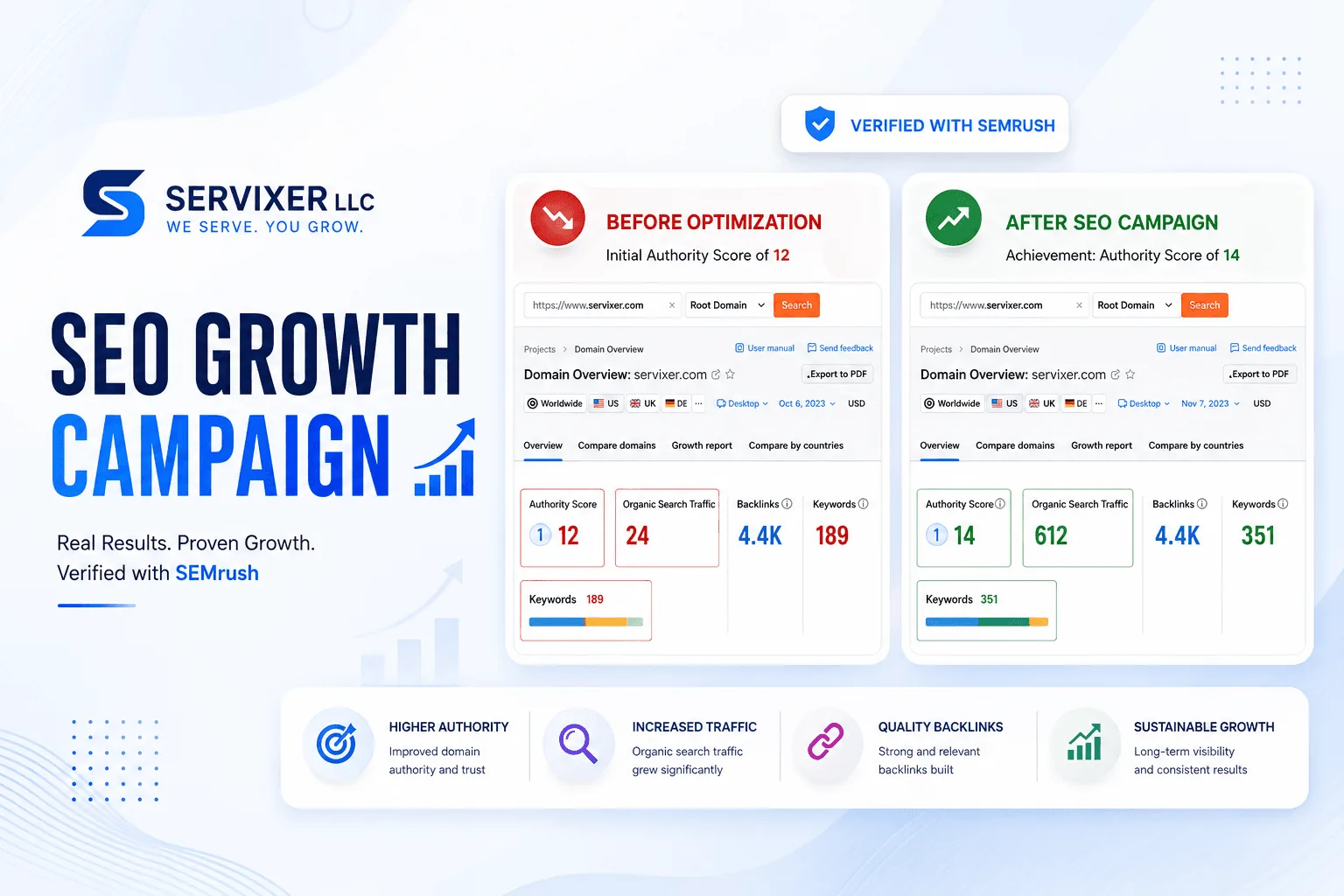
The Challenge
Servixer had high bounce rates on organic visits, crawl budget wasted on old 404 loops and no page 1 rankings for its core service searches. The 404 loops were the root problem, and they are more damaging than they look. Google allocates a finite amount of crawling to any given site. When a large share of those requests end in errors, the crawl rate for the whole host is reduced, so the pages you actually want indexed get visited less often. A site can be technically fine on every page a human sees and still be starved of crawling because of dead URLs nobody has looked at in a year. Bounce rate and missing rankings were downstream of that plus a content problem. Pages existed for commercial queries, but they were thin, similar to each other, and competing for the same terms, which meant none of them was clearly the best answer to anything.
What We Built
We fixed discovery before touching content, because content improvements do not help pages Google is not crawling. Resolving the crawl errors meant mapping every legacy URL to a live destination with a single-hop 301 rather than deleting them or pointing everything at the homepage, which Google treats as a soft 404. That stops the error rate suppressing the crawl budget and recovers whatever authority those old URLs had accumulated. Complete Schema.org JSON-LD graphs followed, connecting the organisation, the services and the pages into one linked structure rather than isolated blocks. This is what lets search engines and AI answer engines understand what the business does and which page answers which question. Pruning low-quality pages is the step most agencies skip because removing pages feels like going backwards. It is not. Thin pages competing for the same query cannibalise each other, and cutting them raises the average quality of what remains. What replaced them were long-form commercial pillar clusters: one substantial page per commercial intent, supported by related pages that link into it, so there is no ambiguity about which page should rank for which term.
What Changed for the Client
Servixer now holds page 1 rankings for competitive, high-value search terms, and organic search has become its best-performing source of new customers. The word that matters there is sustained. Rankings won by technical fixes alone tend to decay. These held because the underlying structure changed: crawling was no longer wasted, every commercial query had one clear page behind it, and the content was substantial enough to deserve the position.
Technology Stack
Have a Similar Project?
Book a free call with the developers who would build it.
More Case Studies
View All Case StudiesAlvi Transport: Car Rental Booking Website
A booking website and fleet app that moved Alvi Transport off phone calls and WhatsApp logs, so customers can see which cars are free and reserve online.
KB GSM: B2B Ecommerce Development for a Phone Parts Wholesaler
A trade store for mobile repair parts and accessories, with quick SKU search and stock levels that update themselves instead of being keyed in by hand.